 EN
EN  ES
ES  FR
FR 




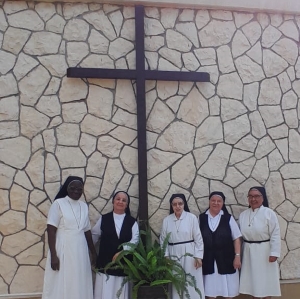
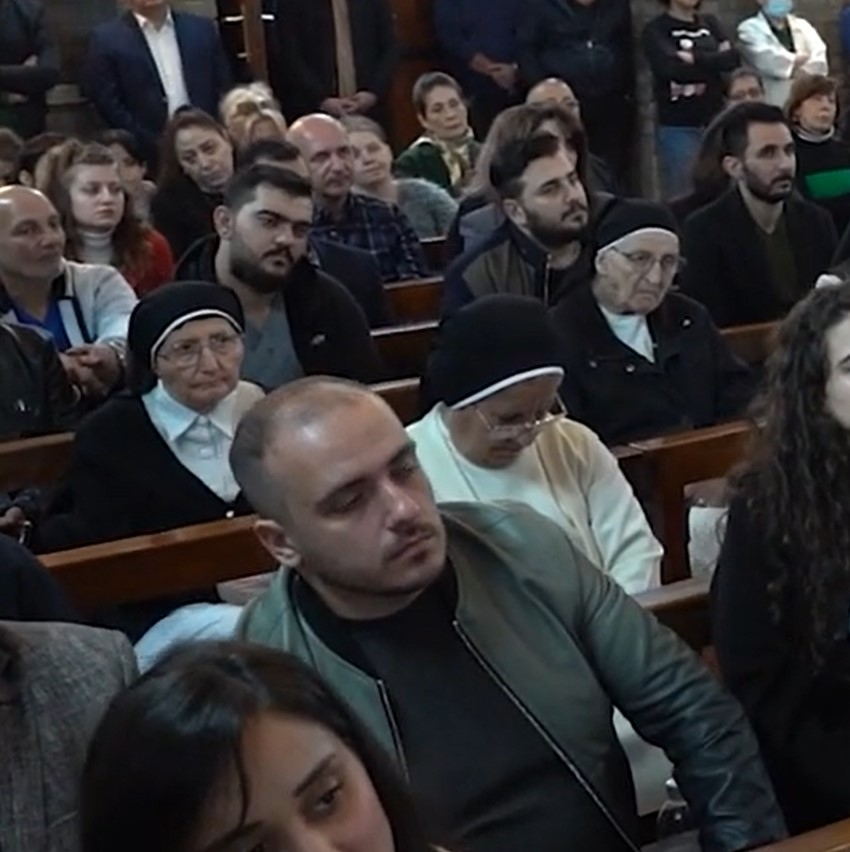
Lebanon, 12/10/2025, Text and photos: Sr. María Ángeles Flores.- When news of Pope Leo XIV’s trip to Lebanon began to circulate, the atmosphere was difficult to describe: something like skepticism, even a certain hostility on the part of some, or perhaps a fear of hoping that such an event could bring any change to the country. Some parishes offered preparatory conferences; privately, welcome songs were composed and publicity materials printed; joy began to emerge, timidly at first.
The Patriarchate asked that the church bells be rung at the moment of the Pope’s arrival at the airport. We prepared a small packet of firecrackers (these are very common here for important celebrations).
On Sunday, November 30, 2025, Ali, the guardian of our house (a Syrian Muslim), was ready to light the powder; his three children had come to the community, and their father had explained to them what little he understood: “Baba Mesihiya” (the father of the Christians).
At 3:45 p.m., the bells rang, filling hearts with indescribable joy. We and the three children did not miss a single detail of the images on television. When our firecrackers went off, the emotion had already overwhelmed us deeply: “Baba Mesihiya! Baba Mesihiya!” We stayed in front of the television for the rest of the afternoon, and the children stayed with us. What did God speak in the depths of each one’s soul? We do not know, but we did understand that they shared our joy.
“The bells of Ghodrass rang, then the firecrackers at the Sisters’ house, and moments later the bells of the parish of Naamura. That made me understand the greatness of what was about to happen.” (Miss Chantal, our neighbor)
Pope Leo XIV’s message, expressed with simplicity, coherence, and conviction, captivated hearts:
He made the Lebanese feel deeply loved by His Holiness; his words of appreciation for their culture, expressed in different ways, began lifting spirits… “You, the Lebanese, are strong like the trees of your beautiful mountains; you are full of fruits like the olive trees that grow on the plain in the south, and in spring by the sea.”
“The Pope is a humble man. I think he will reconcile us with Israel. He is very good, and I love him very much. I’m happy he is in Lebanon.” (Mrs. Leila, resident of the nursing home)
“I like this Pope very much; he radiates a wonderful natural authority.” (Lady encountered in the street)
When the Pope addressed the youth with affection and understanding, he completely won the love of the Lebanese—and perhaps of all the Middle East—because children and youth are very cherished, loved, and respected here.
“I am sure the Pope came especially for the young people; he came to encourage them, to tell them not to leave the country, because it is worth staying, because it is possible to rebuild it.” (Mrs. Jana Ayloul, wine producer)
“Dear young people, perhaps you regret having inherited a world torn by wars and disfigured by social injustices. And yet, within you lies a hope, a gift, that we adults seem to have lost. You have time. You have more time to dream, to organize and to do good. You are the present, and in your hands the future is already being built! And you have the enthusiasm to change the course of history. True resistance to evil is not evil itself, but love, capable of healing your own wounds while healing those of others.”
The central theme of this visit was peace: “Blessed are the peacemakers” (Mt 5:9). His words restored hope to the Lebanese and the peoples of the Middle East…
“I embrace you all and I wish you peace. I make an urgent appeal: let attacks and hostilities cease. Let no one continue believing that armed struggle brings any benefit. Weapons kill, whereas negotiation, mediation, and dialogue build. Let us all choose peace as our path, and not only as our goal!”
“I am very happy; he showed us where to find peace, if we choose it; it depends on us. Why would we want to wage war? Are we going to kill each other for that small piece of land in the south? I pray to God for him.” (Sr. Antoine, resident of the nursing home)
The Pope also spoke with firmness and clarity; he asked political and religious leaders as well as the entire population to strengthen unity.
In his homily at the Mass celebrated on the Beirut waterfront, he invited the Lebanese to “join forces so that this land may recover its splendor.” According to the Holy Father, there is only one way to achieve this: to work for the coming of a Lebanon where “what the prophet Isaiah describes may be fulfilled: ‘The wolf shall dwell with the lamb, the leopard shall lie down with the kid, the calf and the lion cub shall graze together.’”
“Let us disarm our hearts, strip ourselves of the armor of our ethnic and political divisions, open our religious communities to mutual encounter, awaken deep within us the dream of a united Lebanon, where peace and justice triumph, where all may recognize each other as brothers and sisters.”
“The Pope brought us hope, not only to the Lebanese, but to all the Middle East, because he helped us believe that peaceful and respectful coexistence among Muslims, Christians, and Jews is possible. This is not a dream; I lived that coexistence when I was a child.” (Mr. Said, Muslim, owner of a fabric shop)
“The Pope is a man of God; he knew how to say the right words at this very difficult time. He called us to unity. I pray to God that He always gives him wisdom and strength.” (Mrs. Georgette, nursing home resident)
The hearts of the inhabitants of Lebanon trembled with joy and hope when he said to us with confident strength:
“Lebanon, rise up, be a dwelling place of justice and brotherhood!
Be a prophecy of peace for the whole Levant!”Inshallah, amen.